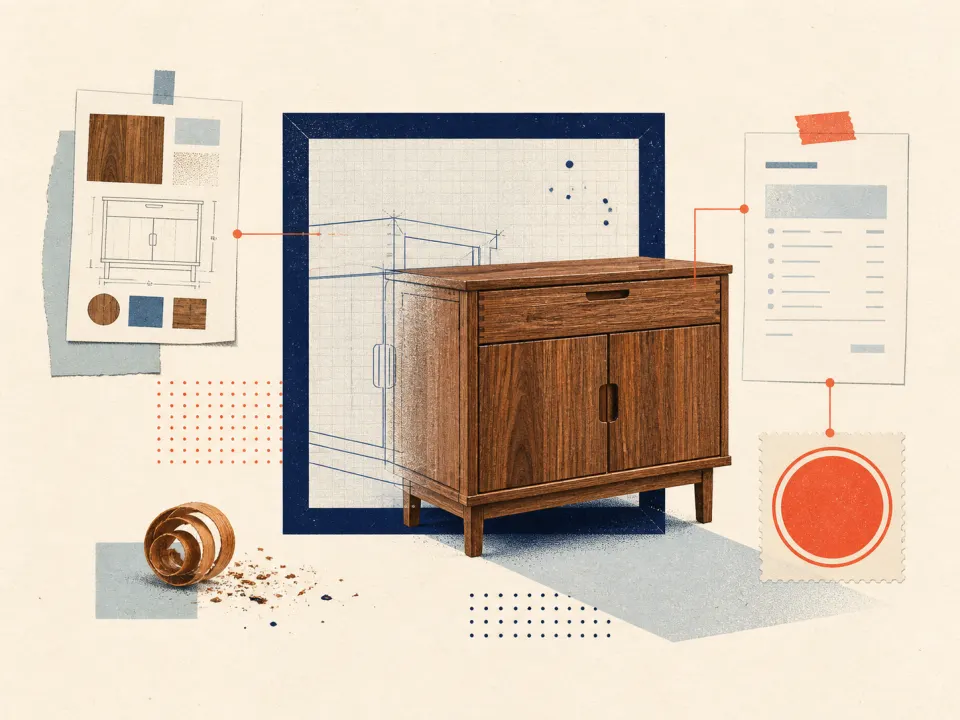
A woodworking portfolio that became the operating system for commissioned work.
My brother-in-law initially needed a simple personal website to show his work and bring in commissions. I built the gallery and contact surface first; it grew into a connected system for categorized work, inquiries, contacts, commissions, project details, quotes, deposits, invoices, and follow-through.
Role
Creator and product engineer
Context
Custom woodworking business
Disclosure
Built for my brother-in-law’s business
The problem
The problem
A portfolio site can attract interest, but a maker still has to turn that interest into an organized commission: understand the request, retain the design details, quote the work, collect a deposit, invoice the client, and notice what needs attention. The website needed to do both jobs—represent the craft publicly and make the resulting business easier to run.
What I built
The system, not just the screen.
A gallery the maker can actually curate
Built a media-backed gallery with categories, featured work, sort order, and public category views. The front of the site stays focused on the craft while the maker can control what appears, how it is grouped, and which work leads the story.
A clean path from interest to a real commission
Built the contact form to validate requests, create or reuse the customer contact, retain a submission record, and notify the maker. The admin workflow then lets a person turn the promising requests into commissions with statuses, descriptions, quotes, deposits, due dates, internal notes, and reference attachments.
Invoices that carry the project context through payment
Built invoices around the commission and client, including dimensions, wood species, style notes, quantity, total, deposit, and delivery balance. Branded public invoice links use unguessable tokens, record views, email from the system, and keep paid invoices immutable as financial records.
System sketch
How the system works.
A simplified view of the system boundary and the work it moves through.
Featured gallery work
Contact request
Contact + submission
Commission workspace
Invoice + payment follow-through
Key decisions
Key decisions
Treat the public portfolio and the back-office workflow as one connected system, not two unrelated projects.
Keep the human decision between a form request and a commission; the system preserves context and flags stale submissions without pretending every inquiry is qualified work.
Put quote, deposit, due-date, attachment, and status context on the commission so project details are not recreated for every invoice or buried in email.
Make the public invoice simple for the client while retaining internal visibility into sending, viewing, receivables, and paid status.
What it enables
What it enables
Wayward Joiner grew from a small marketing site into a useful operating surface for custom work: the gallery earns attention, the business retains the inquiry, and the commission can be carried through to a paid invoice without losing the story of what is being made.